
 RU
RU
 CN
CN
Central Asia and China strengthen a 600‑billion‑dollar market
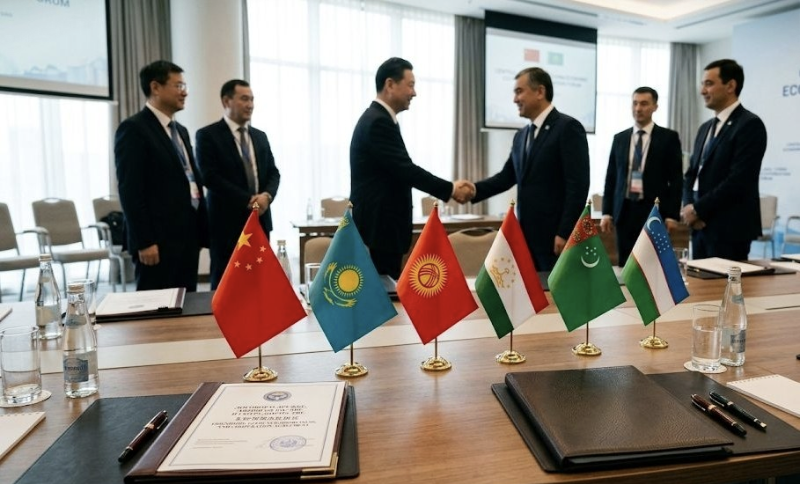
Central Asia is entering a qualitatively new stage of economic development. According to the official forecast of the Eurasian Development Bank (EDB), in 2026 the combined gross domestic product (GDP) of the region’s states will for the first time in history exceed 600 billion US dollars. Average growth rates of the regional economies will be above 6.5%.
Analysts at the financial institution link such robust dynamics to accelerated investment inflows, the development of the industrial sector, rising domestic consumer demand and deeper interstate cooperation. The highest economic growth rates are expected in the Kyrgyz Republic, where the figure will reach 10.2%, making it one of the strongest results across the entire post‑Soviet space.
“Central Asia is gaining momentum: the macro‑region’s GDP growth will exceed 6.5% in 2026, and its economy will for the first time surpass the 600‑billion‑dollar mark,” the EDB analysts note in their macroeconomic forecast.
In parallel with economic growth, the legal and regulatory framework for multilateral cooperation with strategic partners is being strengthened. The Legislative Chamber of the Oliy Majlis (parliament) of the Republic of Uzbekistan has ratified an international treaty on friendship, good‑neighbourliness and cooperation between the People’s Republic of China and the states of Central Asia (Kazakhstan, Kyrgyzstan, Tajikistan, Turkmenistan and Uzbekistan).
According to the press service of Uzbekistan’s legislature, the adopted law enshrines principles of mutual respect for state independence, sovereignty and long‑term strategic interaction in the political and trade‑economic spheres.
For Chinese corporations, state‑owned enterprises and private investors, the simultaneous economic surge in Central Asia and the ratification of a comprehensive friendship treaty open a unique window of opportunity. The achievement of a combined GDP of 600 billion dollars transforms the region from a group of fragmented local markets into a powerful, unified macro‑regional economic hub with high purchasing power.
The political formalization of eternal good‑neighbourliness with China by Uzbekistan and its neighbours radically reduces investment and cross‑border risks for Chinese capital. This creates ideal conditions for large‑scale financing of joint infrastructure projects under the Belt and Road Initiative, the construction of cross‑border railways and logistics terminals, as well as for the establishment of joint industrial enterprises and direct supplies of Chinese technological equipment and FMCG consumer goods to the rapidly growing Central Asian market.