
 RU
RU
 CN
CN
Heat and low excise taxes drive Russian cider sales up by 37%
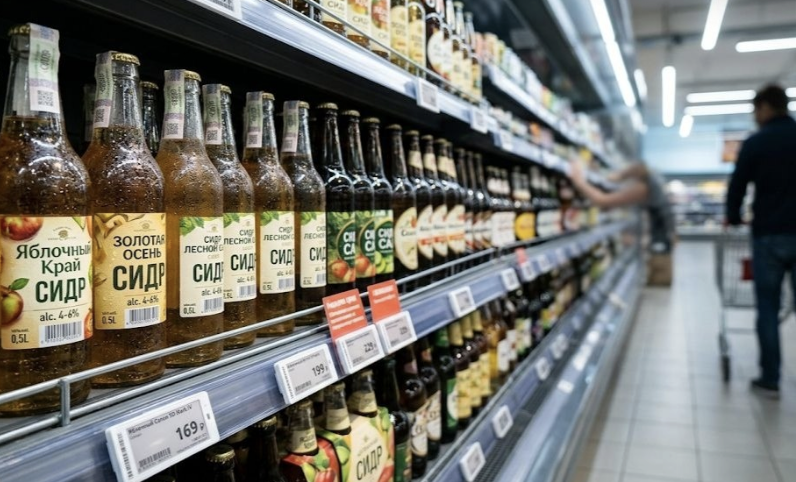
The Russian low‑alcohol beverages market has recorded a sharp surge in consumption of fruit‑based fermented drinks. In June 2026, cider sales reached 877,000 decalitres, showing year‑on‑year growth of 37.4%.
Sales dynamics in related product categories over the same period were as follows:
- Beer – up by 7.41%.
- Beer‑based drinks – up by 6.57%.
- Mead – up by 4.44%.
- Perry (pear cider) – a decline in sales volumes of 20.11%.
According to producers, the primary driver of such vigorous growth was the hot weather that set in at the beginning of summer. However, in July, amid a spell of cooler temperatures, market participants recorded a natural month‑on‑month slowdown in sales compared to June.
In addition to weather conditions, the redistribution of consumer demand is directly influenced by current fiscal policy. Consumers are increasingly choosing those types of beverages that remain affordable on the shelf thanks to their specific tax treatment.
“The growth of the cider category is linked to consumers migrating from adjacent categories. Cider and mead are subject to lower excise tax than low‑alcohol beverages and beer‑based drinks,” emphasized Igor Khavskiy, co‑owner of SVAM Group, a major Russian distributor of alcoholic products.
Despite the positive summer statistics, experts warn that the alcohol market will remain under the pressure of constraining regulatory factors until the end of the year. The main challenge for the industry will be the September transition of all producers to a mandatory electronic document management (EDI) system, which will entail additional administrative and technological costs.
For Chinese businesses specializing in the supply of raw materials and food‑processing equipment, the rapid expansion of the Russian cider market creates a clear demand for long‑term partnerships. Domestic brewing plants require stable volumes of high‑quality apple concentrate, fruit purées and specialized yeast strains sourced from China.
Moreover, the introduction of mandatory electronic document management will accelerate the “whitening” of the market: small grey‑area producers will exit, while large and transparent plants — the most reliable B2B clients — will continue to expand their capacities, actively purchasing Chinese fermentation tanks and automated bottling and filling lines.