
 RU
RU
 CN
CN
Food transportation in the EAEU comes under digital control
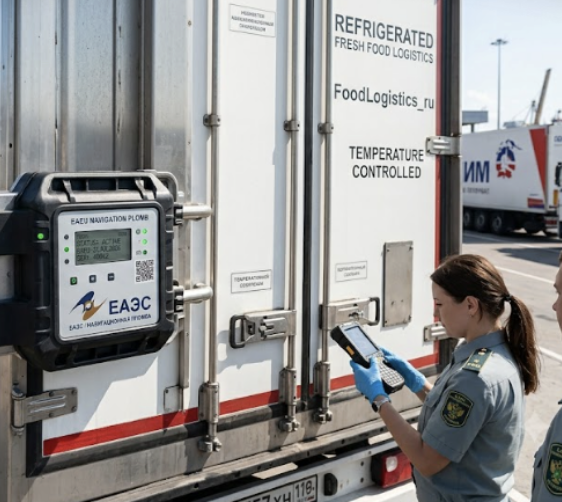
The countries of the Eurasian Economic Union (EAEU) are launching a large‑scale second phase of implementing a navigation seal system to monitor international freight transport. Starting from 31 July 2026, new customs rules will fundamentally change logistics in the food sector, as almost all shipments moved by road will be subject to mandatory use of tracking devices.
The expansion of the list of monitored cargoes includes the following aspects for the food market:
- Total control of road transport: any food products, beverages, and agricultural raw materials transported by trucks between member states will now be subject to digital tracking.
- Existing rules: the first phase of the system was launched on 11 February 2026. Until now, in the food segment mandatory electronic sealing applied exclusively to alcoholic products.
Acceleration of customs procedures
The integration of modern electronic devices is aimed at simplifying and speeding up the passage of bureaucratic logistics procedures. According to expert estimates, the use of navigation seals can reduce the time required to complete customs operations by 30–40%. As of today, control systems within the EAEU already cover around 40,000 commercial vehicles.
For grocery retailers and exporters of food products, scaling up the navigation seal system is of strategic importance. A 40% reduction in customs inspection time is critical for the logistics of perishable goods (fresh vegetables, fruit, dairy and meat delicatessen items), as it helps minimize the risk of breaking the temperature regime in refrigerated trucks during border checks.
At the same time, food carriers will have to quickly adapt their vehicle fleets to the new requirements, which may lead to a temporary increase in freight rates due to the costs of installing and maintaining the tracking devices themselves.