
 RU
RU
 CN
CN
China has secured second place in kiwi exports to Uzbekistan
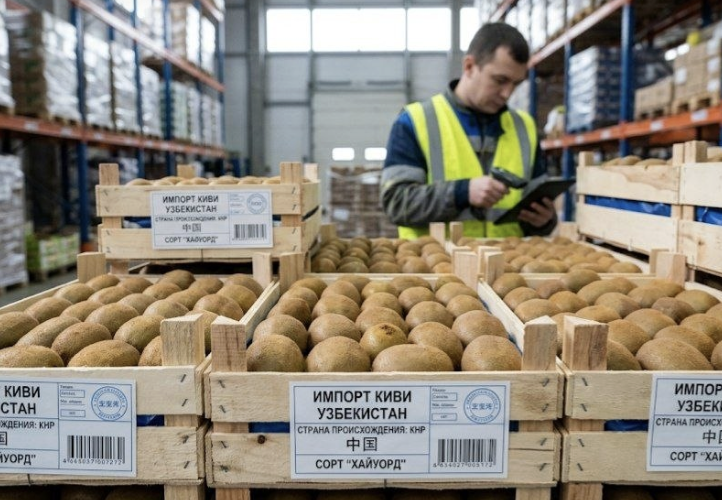
In the first four months of 2026, 7.3 thousand tons of kiwis were imported into the Republic of Uzbekistan. According to reports from the National Statistics Committee (Statistics Agency of Uzbekistan), the total value of imported fruit and vegetable products in this segment amounted to 2.8 million US dollars.
The current dynamics of foreign trade operations reflect an intensive increase in consumer demand for this fruit in the country's domestic market. Compared to the same period in 2025, the physical volume of imports increased by 2.7 thousand tons, which is equivalent to a 59 percent growth in supplies.
Purchases of fruit and vegetable products during the reporting period were made from eight foreign countries. The geographical structure was distributed as follows:
- Iran — the absolute market leader, having shipped 6 thousand tons of fruit, which accounts for the largest share of the total import volume.
- China — confidently holds the second position in the list of key partners, having exported 1.2 thousand tons of kiwis to Uzbekistan.
- Kazakhstan — supplied 27.5 tons.
- Thailand — delivered 13 tons.
- Italy — dispatched 3.6 tons.
The total volume of imports from all other supplier countries amounted to a combined 5.5 tons.
For Chinese manufacturers and exporters of fruit and vegetable products, the market of Uzbekistan and Central Asian countries opens up stable long-term prospects. The outstripping growth in demand for fresh imported fruits and the PRC's solid second place in the procurement structure confirm the high competitiveness of Chinese agribusiness. To strengthen their positions and successfully compete with Iranian suppliers, it is important for Chinese companies to optimize cross-border logistics routes, actively use refrigerated transport to preserve cargo freshness, and offer favorable supply terms for large Central Asian retail chains.