
 RU
RU
 CN
CN
Russia prepares for digital labeling of meat semi‑finished products
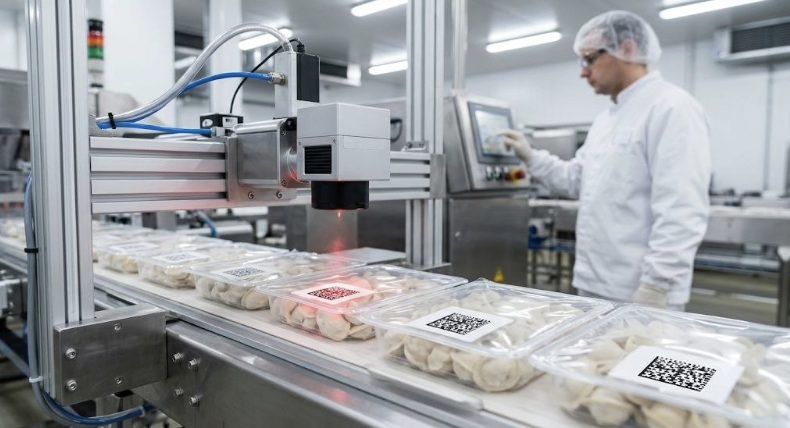
The Russian Federation is continuing the phased introduction of mandatory digital labeling for meat products within the national “Chestny ZNAK” track‑and‑trace system. In 2026, in accordance with Government Decree No. 205, labeling will begin for ready‑to‑eat meat products and sausages, and regulators are expected to later extend these requirements to the segment of meat semi‑finished products.
The new regulatory framework already directly affects a wide range of packaged food products in which the share of meat ingredients exceeds 60%. The first wave covers ready‑to‑eat and canned meat products, as well as sausage items sold through traditional retail channels and online marketplaces. The sale of such goods without a two‑dimensional Data Matrix code printed on the packaging will be gradually prohibited by law.
Loose (in‑store weighed) products packed at the point of sale in the presence of the customer, specialized baby food for children under 12 months of age, and goods intended for export outside the Eurasian Economic Union do not fall under the new rules.
To continue operating legally on the Russian market, manufacturers and distributors are required, already in 2026, to complete mandatory registration in the system and switch to fully electronic document interchange (EDI). The legislation provides for a transition period to allow business processes to be adapted:
-
from 2027, the mandatory transmission of data on the movement of product batches (batch‑level volume and assortment accounting) will be introduced;
-
from 2028, strict unit‑by‑unit traceability for every labeled item will be launched.
Serious administrative fines are envisaged for violations of labeling rules or the absence of a Data Matrix code, with penalties for legal entities reaching up to 300,000 rubles. At the same time, the competent authorities emphasize that the introduction of digital labeling does not remove the obligation to strictly comply with the existing Customs Union Technical Regulation TR CU 021/2011 “On Food Safety” and the requirements of the veterinary information system “Mercury.”
Early preparation for the transition first to batch‑level, and subsequently to unit‑level traceability will enable exporters from China to avoid cargo downtime at customs and to expand the presence of their products on the shelves of Russia’s federal retail chains without disruption.