
 RU
RU
 CN
CN
Russians sharply increase spending on vitamins for pets
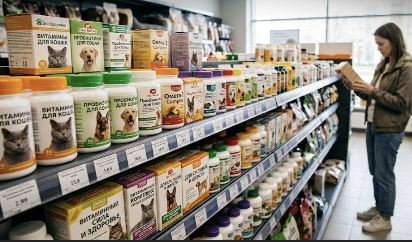
The Russian market for functional supplements for companion animals is showing confident growth. According to estimates by the analytical company RNC Pharma, including online commerce, retail sales in this segment reached 2 billion rubles in the first four months of 2026, which is 14.5% higher than in the same period a year earlier. In physical terms, more than 195.2 million minimum dosage units of products were sold.
“The sector is showing a stable positive trend,” emphasized Kirill Dmitriev, president of the National Association of the Zoo Industry.
At the same time, the expert pointed out that the share of vitamin complexes is still relatively small compared with the overall sales of pet products: in 2025, turnover of supplements exceeded 4 billion rubles, whereas the total pet market in the country is estimated at around 600 billion rubles.petfoodindustry+2
Analysts from specialist companies note a qualitative change in Russians’ approach to the health of their pets. Experts from the pet products distributor Valta Pet Products and representatives of the Harly brand report a mass shift among pet owners from occasional, targeted treatment to systematic prevention. The following key trends are emerging:
-
Daily inclusion of probiotics, omega‑3 fatty acids and chondroprotective agents in the diets of cats and dogs.
-
A sharp increase in sales of products aimed at improving digestion (in particular, revenue from the sale of probiotics grew 1.6‑fold in January–May 2026).
-
Growth in the overall number of households keeping companion animals.
The structure of supply on the market has changed significantly due to import restrictions. In March 2025, the Federal Service for Veterinary and Phytosanitary Surveillance (Rosselkhoznadzor) introduced temporary restrictions on deliveries from a French Purina plant, which led to a collapse in sales of the popular product FortiFlora — down 74% in value terms in the first months of 2026.
The vacated share of the market is rapidly being taken over by Russian analogues (for example, sales of the brand “My Totem” rose 2.3‑fold in ruble terms). A constraining factor for the industry’s development remains the regulatory framework: all feed additives are subject to mandatory state registration.
However, following the withdrawal of several international corporations, an unregistered segment has appeared on the market. Some producers classify their products as treats or use raw material components under the guise of finished supplements in order to bypass bureaucratic procedures. The sector’s main problem is the absence of unified quality standards and strict dosing protocols for active substances.
Opportunities for Chinese manufacturers
The shortage of proven foreign formulations and the exit of Western brands are opening wide opportunities for China’s biotechnology and chemical industries.
Russian manufacturers of pet food and supplements have an acute need for stable supplies of high‑quality, certified raw materials from China: pure amino acids, vitamin premixes, probiotic strains and antioxidants.
In addition, Chinese producers of finished veterinary supplements can successfully enter the Russian retail market, provided they ensure transparent certification of their products with Rosselkhoznadzor and offer standardized dosages — precisely the parameter now being demanded by Russia’s leading distributors.