
 RU
RU
 CN
CN
Functional Food Market in Russia and CIS in 2026
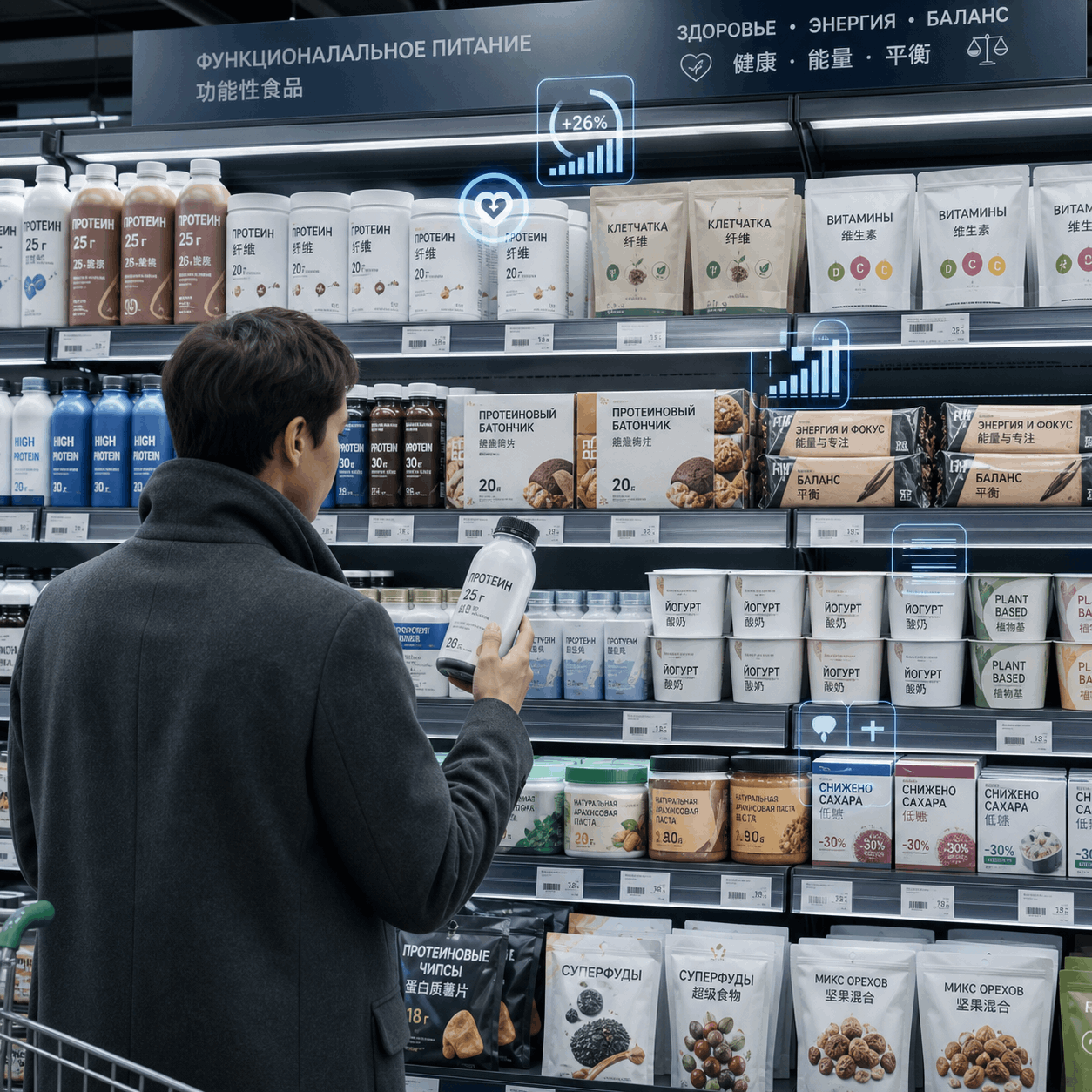
By 2026, the functional food segment in Russia and the CIS has moved into a phase of full-scale mass demand. Functional products are growing faster than traditional FMCG categories, while governments and industry institutions are building dedicated standards and certification infrastructure for this market.
Russia remains the core market in the region and the main entry point for foreign suppliers of functional products. In 2025, the country launched a voluntary certification system, “Roskachestvo – Functional Nutrition,” under which around 100 products from eight manufacturers received official confirmation of their functional properties. This effectively created a new segment on the shelf – products with proven added health benefits. In parallel, industry analytics report a steady rise in high-protein and functional launches: by the end of 2025, these SKUs accounted for up to 5% of all new product introductions, making functional food one of the main drivers of innovation in the food industry.
For consumers, this means more trust anchors and a wider choice of better-for-you alternatives in familiar categories – from dairy and bakery to snacks and spreads. For manufacturers and retailers, it implies a higher quality threshold, but also the opportunity to work in a premium price segment with structurally strong demand.
In other CIS countries – primarily Kazakhstan and Uzbekistan – functional nutrition is being integrated into broader public health policies focused on promoting healthier lifestyles and reducing the burden of non-communicable diseases. National healthy eating programmes developed and updated between 2020 and 2025 set targets for increasing life expectancy and reducing the share of the population suffering from obesity and cardiovascular diseases, partly by shifting diets towards healthier food options.
In practice, this translates into support measures for manufacturers, educational campaigns and growing interest from retailers in functional products as a category that combines social impact with commercial potential. For the CIS market as a whole, this sets a long-term trajectory: functional food is moving beyond a short-lived trend to become an integral part of systemic population health strategies.
For Chinese producers of functional foods and ingredients, Russia and the CIS rank among the most promising export destinations in 2025–2026. Chinese companies have strong competencies in foodtech, alternative proteins, sugar substitutes (including sweet proteins), probiotics and “smart” beverages, enabling them to offer turnkey products and ingredient platforms tailored to Russian and Eurasian regulatory requirements.
Key opportunities for Chinese brands in the CIS include:
– Supplying ready-to-consume functional products – beverages, snacks, enriched desserts and spreads – with localised packaging and formulations to meet Russian and EAEU regulations.
– Exporting functional ingredients such as plant proteins, sweet proteins, maltitol, oligofructose, probiotic cultures and vitamin-mineral premixes for Russian and regional manufacturers developing their own functional lines under local brands.
– Building joint projects with retail chains and local producers to launch private label functional ranges – a particularly relevant format given rising consumer trust in grocery store brands.
A major competitive advantage of Chinese players is their ability to deliver comprehensive solutions: from R&D and ingredient development to finished products and technical support for local production facilities. This reduces risk and shortens time-to-market for functional innovations in the CIS.
For Chinese manufacturers targeting Russia and the wider CIS, 2025–2026 is the time to move from opportunistic shipments to a structured presence in the functional segment. Recommended priorities include:
– Designing product lines in line with Russian and Eurasian regulatory requirements for functional foods, with predefined levels of protein, fibre, vitamins, minerals and reduced sugars that fit certification criteria.
– Developing recipes with potential certification in Russia (via “Roskachestvo – Functional Nutrition”) and similar mechanisms that may be introduced in other CIS markets, so that products are ready for official confirmation of functional properties.
– Creating products in formats familiar to local consumers – kefir-like drinks, curd desserts, spreads, bars, biscuits – but with added functional value, rather than focusing solely on exotic concepts.
– Building partnerships with Russian and regional manufacturers and retail chains for local bottling, packing and private label production, which lowers market entry barriers and increases trust in the brand.
According to RetailChina.pro, 2025–2026 is a turning point for the integration of Chinese functional products into Russia and CIS markets. The regulatory framework and consumer demand are already in place, while shelf supply still lags behind potential. For Chinese producers, this is a rare window of entry when they can position themselves not only as suppliers of finished goods, but as strategic partners for retailers and local factories, bringing their own R&D, ingredient solutions and private label projects. RetailChina.pro experts believe the next two to three years will be critical for the allocation of market shares in the CIS functional segment. Companies that are already building long-term partnerships, adapting formulations to certification requirements and investing in educational projects with retailers will secure a lasting competitive edge. The platform’s mission is to provide a transparent communication channel between Chinese manufacturers and regional retailers, reduce counterparty risks and accelerate the rollout of functional products on shelves in Russia and across the CIS.